
Quiz-summary
0 of 69 questions completed
Questions:
- 1
- 2
- 3
- 4
- 5
- 6
- 7
- 8
- 9
- 10
- 11
- 12
- 13
- 14
- 15
- 16
- 17
- 18
- 19
- 20
- 21
- 22
- 23
- 24
- 25
- 26
- 27
- 28
- 29
- 30
- 31
- 32
- 33
- 34
- 35
- 36
- 37
- 38
- 39
- 40
- 41
- 42
- 43
- 44
- 45
- 46
- 47
- 48
- 49
- 50
- 51
- 52
- 53
- 54
- 55
- 56
- 57
- 58
- 59
- 60
- 61
- 62
- 63
- 64
- 65
- 66
- 67
- 68
- 69
Information
The thirteenth theoretical exam set contains 70 questions.
You have already completed the quiz before. Hence you can not start it again.
Quiz is loading…
You must sign in or sign up to start the quiz.
You have to finish following quiz, to start this quiz:
Results
Your time:
Time has elapsed
- 1
- 2
- 3
- 4
- 5
- 6
- 7
- 8
- 9
- 10
- 11
- 12
- 13
- 14
- 15
- 16
- 17
- 18
- 19
- 20
- 21
- 22
- 23
- 24
- 25
- 26
- 27
- 28
- 29
- 30
- 31
- 32
- 33
- 34
- 35
- 36
- 37
- 38
- 39
- 40
- 41
- 42
- 43
- 44
- 45
- 46
- 47
- 48
- 49
- 50
- 51
- 52
- 53
- 54
- 55
- 56
- 57
- 58
- 59
- 60
- 61
- 62
- 63
- 64
- 65
- 66
- 67
- 68
- 69
- Answered
- Review
-
Question 1 of 69
Question 1

Which vehicle has the least environmental impact?
Correct
The bicycle does not emit harmful gases.
Incorrect
The bicycle does not emit harmful gases.
-
Question 2 of 69
Question 2
What types of accidents are caused by elderly drivers more than other drivers?
Correct
Older adults are more likely to have accidents due to several factors, including impaired senses such as vision or attention, and delayed reaction time.
Incorrect
Older adults are more likely to have accidents due to several factors, including impaired senses such as vision or attention, and delayed reaction time.
-
Question 3 of 69
Question 3
How do young drivers perceive their driving ability compared to other drivers on the road?
Correct
Young people are naturally impulsive and overconfident, and they think less about risks than older drivers. This is why they often think they are better drivers than other drivers, but this is just their assumption.
Incorrect
Young people are naturally impulsive and overconfident, and they think less about risks than older drivers. This is why they often think they are better drivers than other drivers, but this is just their assumption.
-
Question 4 of 69
Question 4
You are driving on a road with a speed limit of 90 km/h, and you see in your mirror a car trying to overtake you. Are you allowed to use the side of the road to facilitate overtaking?
Correct
Yes, you can do that if there are no obstacles and the road is completely clear in front of you so as not to put yourself in an awkward situation. You are also obligated to facilitate the overtaking process if possible.
Incorrect
Yes, you can do that if there are no obstacles and the road is completely clear in front of you so as not to put yourself in an awkward situation. You are also obligated to facilitate the overtaking process if possible.
-
Question 5 of 69
Question 5
You want to drive in the dark and you have a load sticking out behind your car, what do you do?
Correct
You must mark the load with a red reflector and a red light if it protrudes from the rear.
Incorrect
You must mark the load with a red reflector and a red light if it protrudes from the rear.
-
Question 6 of 69
Question 6
You have a heavy load to transport in your trailer in a populated area. Do you need to check something important before moving?
Correct
The driver must always ensure that the load is securely secured so that it does not fall or fly off the road. The driver is also responsible for the load and its safety.
Incorrect
The driver must always ensure that the load is securely secured so that it does not fall or fly off the road. The driver is also responsible for the load and its safety.
-
Question 7 of 69
Question 7
What is the substance in harmful gases that causes acidity in both forests and lakes?
Correct
Nitrous oxide is the primary cause of what is called the acidification of forests and lakes.
Incorrect
Nitrous oxide is the primary cause of what is called the acidification of forests and lakes.
-
Question 8 of 69
Question 8
What should you have in your car?
Correct
The warning triangle must be present in your car at all times, and it must also be present during the annual vehicle inspection.
Incorrect
The warning triangle must be present in your car at all times, and it must also be present during the annual vehicle inspection.
-
Question 9 of 69
Question 9
Does your driving style contribute to increased tire wear?
Correct
Frequent and harsh braking also causes increased wear on the car’s tires, in addition to increased speed.
Incorrect
Frequent and harsh braking also causes increased wear on the car’s tires, in addition to increased speed.
-
Question 10 of 69
Question 10
What determines when a child should sit in a seat belt, child seat, or infant seat?
Correct
The child’s height is what determines the child’s height. The child must sit well and comfortably in the car according to his height.
Incorrect
The child’s height is what determines the child’s height. The child must sit well and comfortably in the car according to his height.
-
Question 11 of 69
Question 11
Who is a danger to other traffic in normal circumstances?
Correct
A person looking for adventure and excitement, for example:
a person driving fast
A person who wants to overtake everyone in the way
A person who thinks he can do whatever he wants without harm
A person who does not pay attention to other road users
And so on…Incorrect
A person looking for adventure and excitement, for example:
a person driving fast
A person who wants to overtake everyone in the way
A person who thinks he can do whatever he wants without harm
A person who does not pay attention to other road users
And so on… -
Question 12 of 69
Question 12
What tax is calculated based on the carbon dioxide emissions from your car?
Correct
The tax is calculated based on the harmful gases emitted from your vehicle.
Incorrect
The tax is calculated based on the harmful gases emitted from your vehicle.
-
Question 13 of 69
Question 13
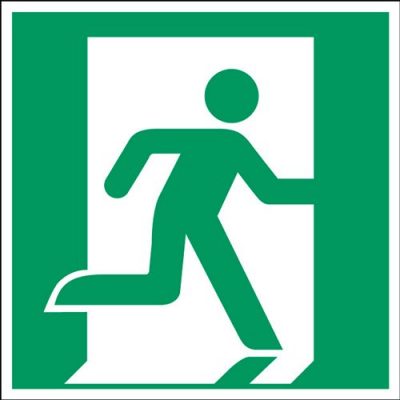
This sign is located in the tunnels. What does this sign tell you?
Correct
This sign shows the exit location to escape from the place in case of an emergency.
Incorrect
This sign shows the exit location to escape from the place in case of an emergency.
-
Question 14 of 69
Question 14
Which of these drivers sets the safest example in traffic?
Correct
A careful driver who takes into account that mistakes can happen in traffic and that drivers can make a mistake is a safe driver who drives safely.
Incorrect
A careful driver who takes into account that mistakes can happen in traffic and that drivers can make a mistake is a safe driver who drives safely.
-
Question 15 of 69
Question 15
You hit a Rådjur and the animal fell to the ground and died. Do you have to do anything?
Correct
I put the animal in my trunk, go home and have a barbecue!
Wait a minute, I’m kidding guys 😀Move the animal if it poses a danger to other traffic, put a sign in the area, and call the police.
Incorrect
I put the animal in my trunk, go home and have a barbecue!
Wait a minute, I’m kidding guys 😀Move the animal if it poses a danger to other traffic, put a sign in the area, and call the police.
-
Question 16 of 69
Question 16
You are driving at 90 km/h and there is a car that wants to overtake you. What should you do?
Correct
I park my car on the side of the road if possible, meaning if there is space and there are no obstacles or anything preventing you from overtaking easily. The side of the road is the far right.
Incorrect
I park my car on the side of the road if possible, meaning if there is space and there are no obstacles or anything preventing you from overtaking easily. The side of the road is the far right.
-
Question 17 of 69
Question 17
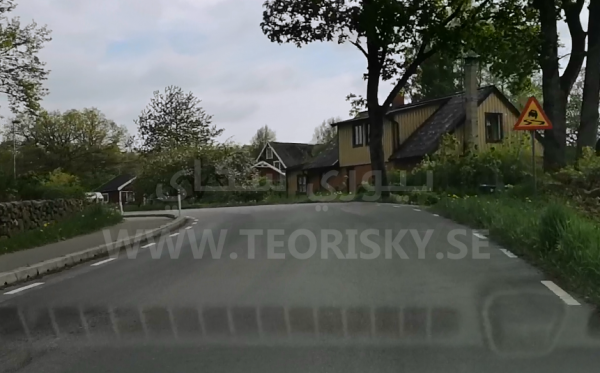
You just reached this juncture, what should you do?
Correct
As you can see, there is a sign indicating that the road may be slippery. Therefore, to avoid slipping, the best solution you can follow is to reduce your speed when approaching the bend.
Incorrect
As you can see, there is a sign indicating that the road may be slippery. Therefore, to avoid slipping, the best solution you can follow is to reduce your speed when approaching the bend.
-
Question 18 of 69
Question 18
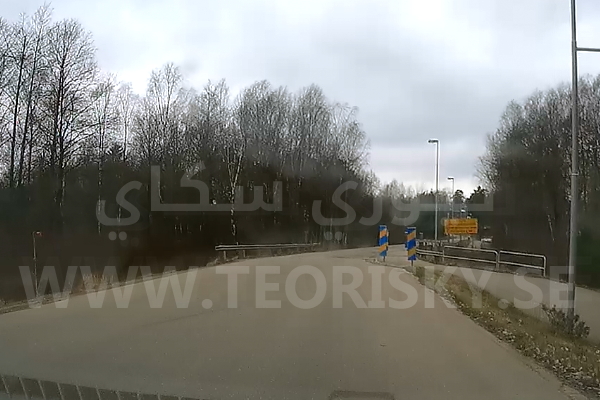
I just got here, what’s the right choice?
Correct
If there is a car coming from the opposite direction, you must stop until the car passes because the obstacle is on your side and so as not to cause a traffic obstruction here.
Incorrect
If there is a car coming from the opposite direction, you must stop until the car passes because the obstacle is on your side and so as not to cause a traffic obstruction here.
-
Question 19 of 69
Question 19
Someone sold his car, who is responsible for reporting the sale and purchase process?
Correct
The seller and buyer must sign the car ownership exchange paper to remove liability from both the seller and the buyer.
Incorrect
The seller and buyer must sign the car ownership exchange paper to remove liability from both the seller and the buyer.
-
Question 20 of 69
Question 20
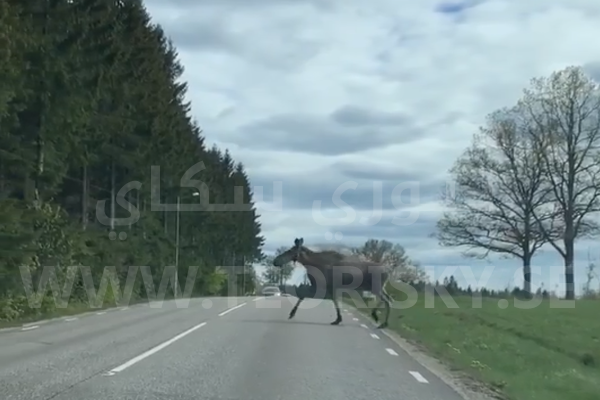
You were driving on a road with a speed limit of 70 km/h and you encountered this situation, how would you react?
Correct
In this case, do not try to maneuver to pass the moose. Just slow down or stop until it passes safely.
Incorrect
In this case, do not try to maneuver to pass the moose. Just slow down or stop until it passes safely.
-
Question 21 of 69
Question 21
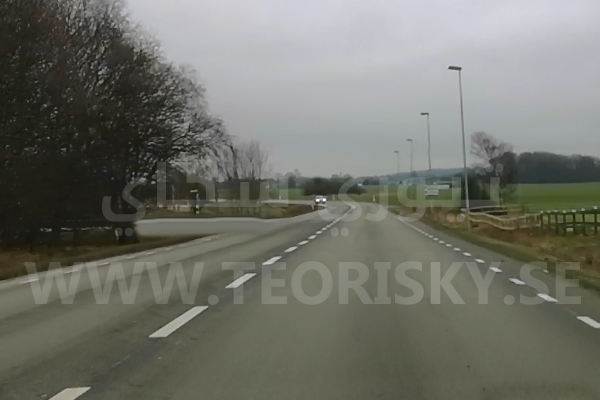
You are driving on this road and want to turn left at the intersection shown. Where will you drive your car in this situation?
Correct
You should move your vehicle closer to the center line in preparation for your left turn and to make it clear to other vehicles behind you that you intend to turn left.
Incorrect
You should move your vehicle closer to the center line in preparation for your left turn and to make it clear to other vehicles behind you that you intend to turn left.
-
Question 22 of 69
Question 22
When you load your car, there is a weight change. What is the weight that changes when you load the car?
Correct
Different weights in vehicles
1- Actual service weight = the weight of the vehicle ready to drive, including the spare tire, oil, fuel, water, and tool box, in addition to the driver’s weight of 75 kg.2-Maximum load weight is the weight that is allowed to be loaded on the vehicle.3-Total weight = Actual service weight + Maximum permissible load weight4-Gross (net) weight = Actual service weight + Load weight less maximum load weight
The total weight is what changes.
Incorrect
Different weights in vehicles
1- Actual service weight = the weight of the vehicle ready to drive, including the spare tire, oil, fuel, water, and tool box, in addition to the driver’s weight of 75 kg.2-Maximum load weight is the weight that is allowed to be loaded on the vehicle.3-Total weight = Actual service weight + Maximum permissible load weight4-Gross (net) weight = Actual service weight + Load weight less maximum load weight
The total weight is what changes.
-
Question 23 of 69
Question 23
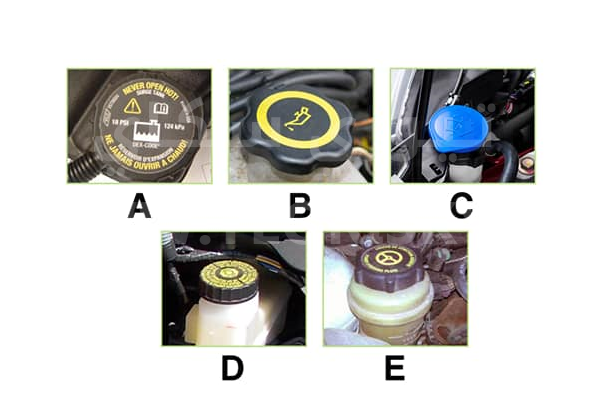
Which of the following containers, if the fluid runs out, will make it difficult for the car to steer on the road?
Correct
The container in picture E is the hydraulic oil container.
Incorrect
The container in picture E is the hydraulic oil container.
-
Question 24 of 69
Question 24
Which of these containers, if the liquid is empty, must be lifted from the place with a crane?
Correct
The container in picture D is the brake fluid container.
Incorrect
The container in picture D is the brake fluid container.
-
Question 25 of 69
Question 25
A person drinks 14 liters of alcohol. How much does the body need to burn the alcohol?
Correct
Every hour the body burns 2 liters of alcohol, so the body needs about 7 hours to burn the amount of alcohol mentioned in the question.
Incorrect
Every hour the body burns 2 liters of alcohol, so the body needs about 7 hours to burn the amount of alcohol mentioned in the question.
-
Question 26 of 69
Question 26
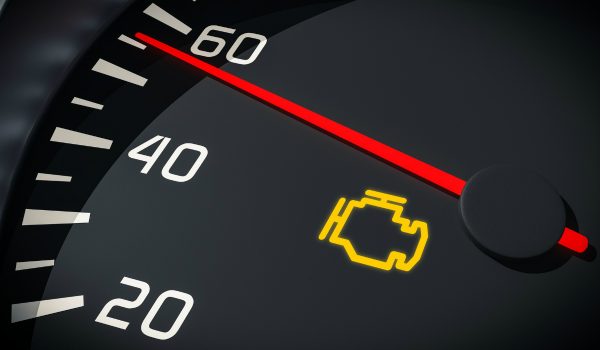
This symbol is lit up on your car dashboard. What does it mean?
Correct
Gas purification system malfunction. The problem must be checked by a repair shop.
Incorrect
Gas purification system malfunction. The problem must be checked by a repair shop.
-
Question 27 of 69
Question 27
Which container should be replaced if it is used in large quantities?
Correct
The fluid is in container B, which is the engine oil container.
Incorrect
The fluid is in container B, which is the engine oil container.
-
Question 28 of 69
Question 28
You are driving on the road and you increase your speed from 40 km/h to 120 km/h. How is the kinetic energy of the car affected in this case?
Correct
You have tripled your speed, so in this case we calculate as follows:
Three times the speed. We multiply the number by which we doubled the speed. That is, we increased the speed three times. 3 times 3 equals 9. This means that the kinetic energy increases nine times.Incorrect
You have tripled your speed, so in this case we calculate as follows:
Three times the speed. We multiply the number by which we doubled the speed. That is, we increased the speed three times. 3 times 3 equals 9. This means that the kinetic energy increases nine times. -
Question 29 of 69
Question 29
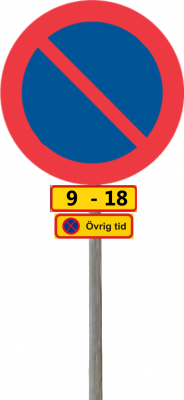
Are you allowed to park your car on holidays and festivals at 8 pm?
Correct
The main sign means that parking is prohibited in the place (behind the sign).
The second sign is the time when the parking ban is in effect.
The third sign means that stopping and parking are prohibited during times other than those mentioned. The difference here is that parking is prohibited during the times shown, but outside of those times, parking and even short stops are prohibited.Conclusion: Parking is prohibited on regular business days between 9 a.m. and 6 p.m. During these times, only brief stops are permitted, such as to pick up or drop off a passenger. Parking and stopping outside of these hours are prohibited.
On Saturdays, Sundays and red days, stopping and parking are prohibited.
Incorrect
The main sign means that parking is prohibited in the place (behind the sign).
The second sign is the time when the parking ban is in effect.
The third sign means that stopping and parking are prohibited during times other than those mentioned. The difference here is that parking is prohibited during the times shown, but outside of those times, parking and even short stops are prohibited.Conclusion: Parking is prohibited on regular business days between 9 a.m. and 6 p.m. During these times, only brief stops are permitted, such as to pick up or drop off a passenger. Parking and stopping outside of these hours are prohibited.
On Saturdays, Sundays and red days, stopping and parking are prohibited.
-
Question 30 of 69
Question 30
You had your vehicle inspected as usual on March 1st of this year. When do you need to have it re-inspected?
Correct
The vehicle must be inspected 14 months after the date of the last inspection.
Incorrect
The vehicle must be inspected 14 months after the date of the last inspection.
-
Question 31 of 69
Question 31
When does a motivated candidate start working effectively?
Correct
When the catalyst filter is heated to a temperature of 400-600°C.
Incorrect
When the catalyst filter is heated to a temperature of 400-600°C.
-
Question 32 of 69
Question 32
Can speed increase the incidence of tunnel vision?
Correct
Yes, speed increases the risk of tunnel vision. The driver cannot see what is going on around him, nor traffic signs or the sides of the road, and his field of vision becomes only in front of him at a certain point.
Incorrect
Yes, speed increases the risk of tunnel vision. The driver cannot see what is going on around him, nor traffic signs or the sides of the road, and his field of vision becomes only in front of him at a certain point.
-
Question 33 of 69
Question 33
Which gases contribute most to the greenhouse effect?
Correct
Carbon dioxide is the gas emitted from the exhaust of vehicles.
Incorrect
Carbon dioxide is the gas emitted from the exhaust of vehicles.
-
Question 34 of 69
Question 34
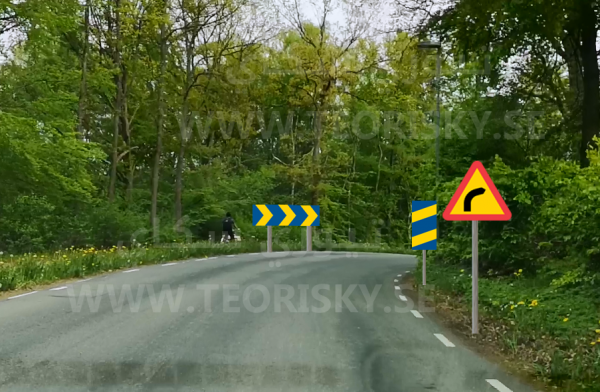
You just arrived here, how do you behave to cross safely in this place?
Correct
When turning, especially sharp turns, reduce your speed to avoid slipping or colliding with another vehicle.
Incorrect
When turning, especially sharp turns, reduce your speed to avoid slipping or colliding with another vehicle.
-
Question 35 of 69
Question 35
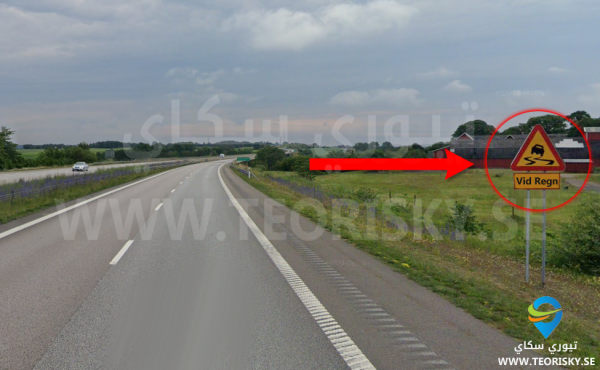
You are driving down the road and you see this sign and its accompanying information. What do you understand by these signs?
Correct
The road may be slippery when it rains.
Incorrect
The road may be slippery when it rains.
-
Question 36 of 69
Question 36
You are stopped at a traffic light at an intersection and the road conditions are slippery and there is snow. What should you do to move safely?
Correct
I put a higher gear than usual and drive on my way, in this way the car will move very slowly and this condition is called crawling.
Incorrect
I put a higher gear than usual and drive on my way, in this way the car will move very slowly and this condition is called crawling.
-
Question 37 of 69
Question 37
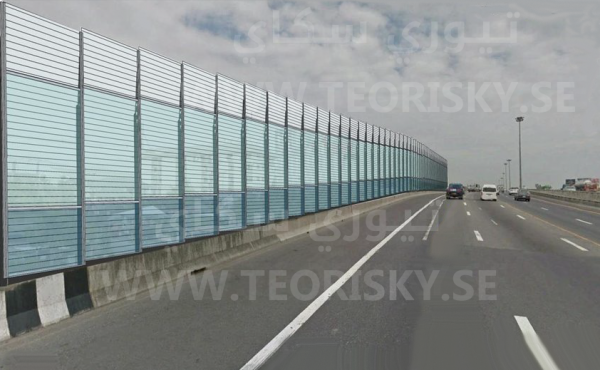
In some residential areas there are high walls on the sides of the road. Why are there these walls?
Correct
To reduce the noise from cars on the road on the rest of the residents in the area behind these walls.
Incorrect
To reduce the noise from cars on the road on the rest of the residents in the area behind these walls.
-
Question 38 of 69
Question 38
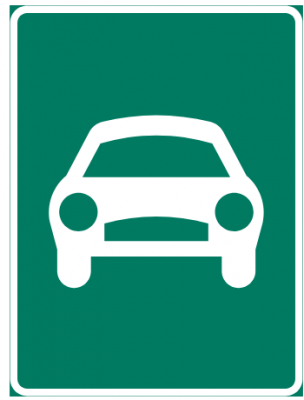
You are driving on a road with this sign. Are you allowed to stop to pick up or drop off a passenger on this road?
Correct
The sign means that the road is a highway. The speed on this road may be 80, 90 or 100 km per hour. You are not allowed to stop on the road except in the places designated for stopping and marked with a P sign.
Incorrect
The sign means that the road is a highway. The speed on this road may be 80, 90 or 100 km per hour. You are not allowed to stop on the road except in the places designated for stopping and marked with a P sign.
-
Question 39 of 69
Question 39
An accident occurred and you were involved in it. Do you have to give your name and address to the other participants in the accident?
Correct
Yes, you must give your data to the other party.
Incorrect
Yes, you must give your data to the other party.
-
Question 40 of 69
Question 40
Do you have the right to stop on the side of the road to drop off or pick up a passenger on a road with a speed limit of 110 km/h?
Correct
You are not allowed to stop on a highway for any reason beyond your control, as this may lead to fatal accidents.
Incorrect
You are not allowed to stop on a highway for any reason beyond your control, as this may lead to fatal accidents.
-
Question 41 of 69
Question 41
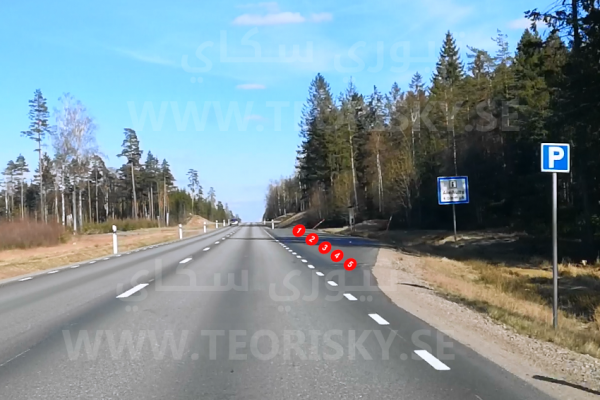
You want to stop here to make a phone call, at which number will you stop your car?
Correct
You must stop in front so that if there are cars that also want to stop, they have room without causing them an obstruction by stopping at the beginning or middle of the space.
Incorrect
You must stop in front so that if there are cars that also want to stop, they have room without causing them an obstruction by stopping at the beginning or middle of the space.
-
Question 42 of 69
Question 42
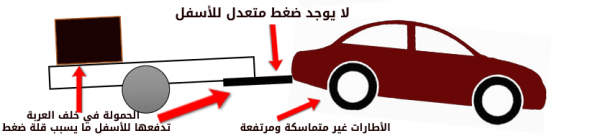
You are driving a car with a trailer attached to it. What does it mean if the tire pressure is insufficient?
Correct
Low radial pressure
Low piston pressure has a significant impact on the vehicle’s performance.
Also, the reason for this is that the load is in a rear part of the trailer and not in the front, and when the load is placed in a rear part of the trailer
It presses the rear of the trailer down, making the pressure on the radius insufficient and uneven, and pulls it up due to the pressure force in the rear of the trailer.
Which is caused by the load and causes a lack of grip for the rear tires of the carSee the illustration
 Incorrect
Low radial pressure
Low piston pressure has a significant impact on the vehicle’s performance.
Also, the reason for this is that the load is in a rear part of the trailer and not in the front, and when the load is placed in a rear part of the trailer
It presses the rear of the trailer down, making the pressure on the radius insufficient and uneven, and pulls it up due to the pressure force in the rear of the trailer.
Which is caused by the load and causes a lack of grip for the rear tires of the carSee the illustration
-
Question 43 of 69
Question 43
How can you make a motivated candidate more active and effective?
Correct
Avoid running the engine at more than 3000 rpm.
That is, you reach the required speed quickly and do not use low gears.Incorrect
Avoid running the engine at more than 3000 rpm.
That is, you reach the required speed quickly and do not use low gears. -
Question 44 of 69
Question 44
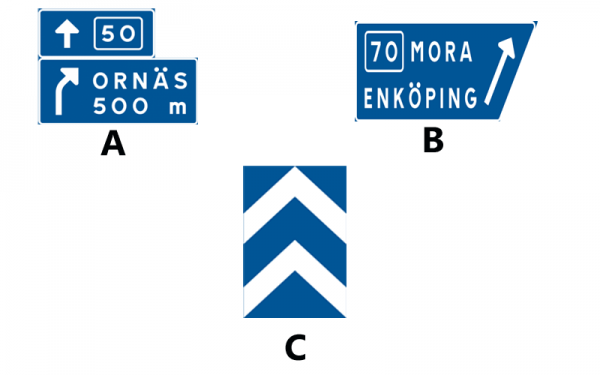
Choose the correct order of these signs when you see them on the highway.
Correct
When you drive your vehicle on a highway, you will see these signs one after the other.
The first board will be A
The second board will be B
The third sign will be C and it is right at the exit and is between the exit and the highway.Incorrect
When you drive your vehicle on a highway, you will see these signs one after the other.
The first board will be A
The second board will be B
The third sign will be C and it is right at the exit and is between the exit and the highway. -
Question 45 of 69
Question 45
What causes wear on the side of the wheel?
Correct
When the car tire rubs against the pavement, it causes wear on the side of the tire.
Incorrect
When the car tire rubs against the pavement, it causes wear on the side of the tire.
-
Question 46 of 69
Question 46
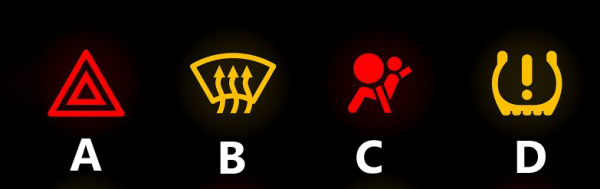
What does the D symbol mean if it lights up on your car’s dashboard?
Correct
When the air level in the tires is low, the D symbol will light up to alert you. It is simple, just adjust the pressure at any gas station or maintenance shop.
Incorrect
When the air level in the tires is low, the D symbol will light up to alert you. It is simple, just adjust the pressure at any gas station or maintenance shop.
-
Question 47 of 69
Question 47
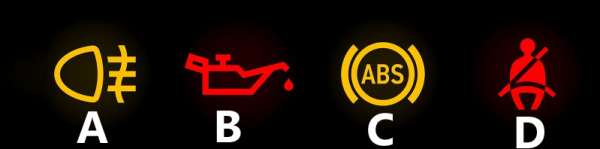
Which symbol, if it lights up on your car’s dashboard, means you should stop immediately?
Correct
Symbol A means fog light active.
Code B Danger Warning Engine oil is too low
Code C indicates a fault in the ABS system.
Code D indicates a faulty air balloon.Incorrect
Symbol A means fog light active.
Code B Danger Warning Engine oil is too low
Code C indicates a fault in the ABS system.
Code D indicates a faulty air balloon. -
Question 48 of 69
Question 48
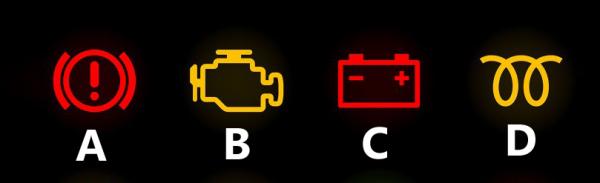
Which of these symbols will light up in your car dashboard while driving to alert you of a brake failure?
Correct
Code A indicates a brake failure.
Code B indicates a fault in the gas purification system.
The C symbol indicates that the battery is not sufficiently charged.
Code D indicates a faulty spark plug – specific to diesel vehiclesIncorrect
Code A indicates a brake failure.
Code B indicates a fault in the gas purification system.
The C symbol indicates that the battery is not sufficiently charged.
Code D indicates a faulty spark plug – specific to diesel vehicles -
Question 49 of 69
Question 49
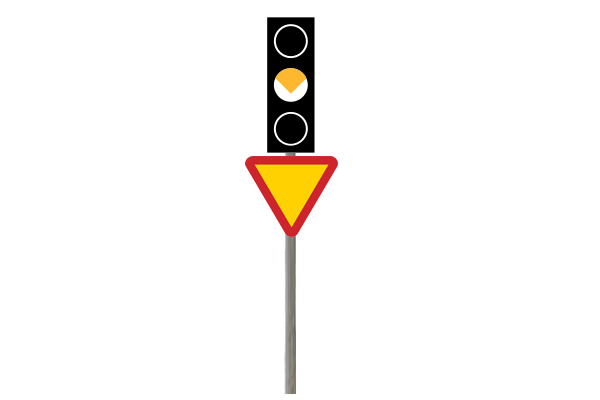
How should you behave when approaching an intersection with a traffic light that is alternating yellow?
Correct
If the traffic light is out of order, then you will have to rely on the traffic signs.
Incorrect
If the traffic light is out of order, then you will have to rely on the traffic signs.
-
Question 50 of 69
Question 50
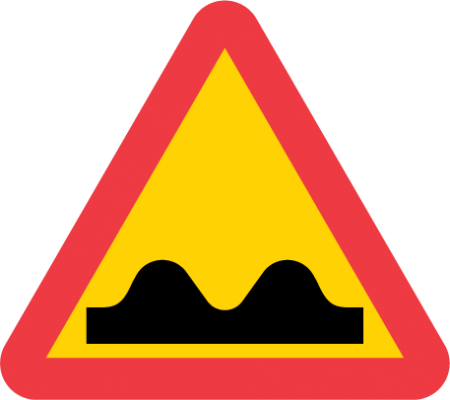
What is the distance that the sign should be placed before the hazard shown on it?
Correct
Warning signs are placed approximately 150 to 250 meters before the danger.
Incorrect
Warning signs are placed approximately 150 to 250 meters before the danger.
-
Question 51 of 69
Question 51
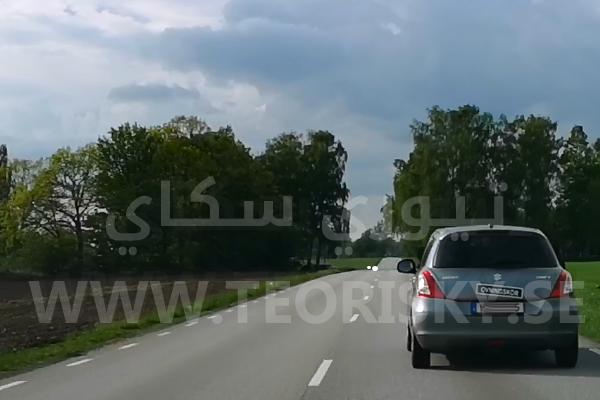
You want to overtake the vehicle in front of you, how should you act in this situation?
Correct
You must be absolutely sure that there are no vehicles coming from the other side of the road before you start overtaking any vehicle in front of you.
Incorrect
You must be absolutely sure that there are no vehicles coming from the other side of the road before you start overtaking any vehicle in front of you.
-
Question 52 of 69
Question 52
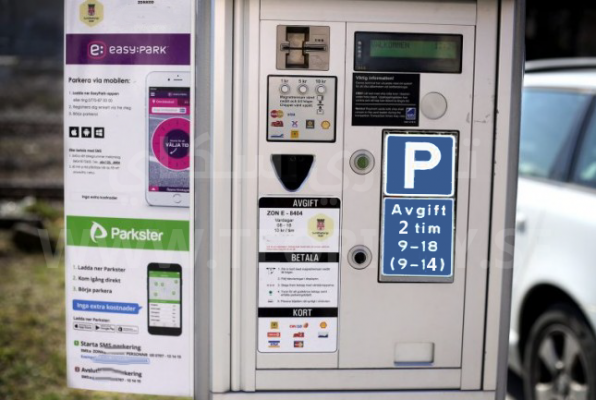
You want to park your car for two hours in a parking lot and you are going to buy a ticket for it. The time now is 13:45. What time will be written on the ticket that comes out of the machine?
Correct
The time is 15:45 which is the ticket expiry time.
Incorrect
The time is 15:45 which is the ticket expiry time.
-
Question 53 of 69
Question 53
You are driving on a highway. In what situation are you not allowed to overtake a vehicle in front of you?
Correct
You are not allowed to start overtaking when you notice a car behind you starting to overtake you.
Incorrect
You are not allowed to start overtaking when you notice a car behind you starting to overtake you.
-
Question 54 of 69
Question 54
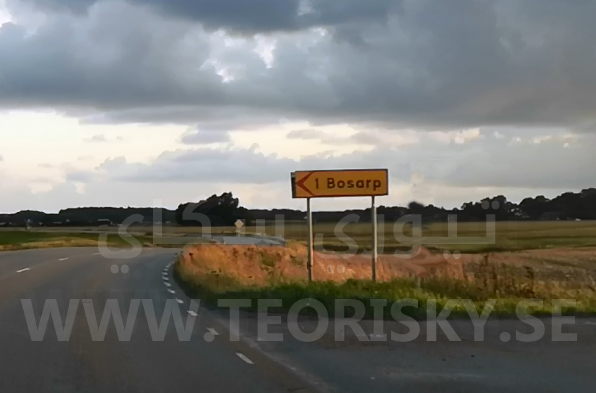
Are you allowed to enter the road marked with this sign to make a turn?
Correct
The sign means that the road lacks traffic signs, meaning that the road may not have traffic signs and you can enter and turn from a suitable place on the road.
Incorrect
The sign means that the road lacks traffic signs, meaning that the road may not have traffic signs and you can enter and turn from a suitable place on the road.
-
Question 55 of 69
Question 55
What is the biggest danger when a driver suffers from speed blindness?
Correct
The driver cannot see road signs, road markings, or other directions. He only sees a specific point or circle in front of him, and does not see anything other than his focus point in front of him.
Incorrect
The driver cannot see road signs, road markings, or other directions. He only sees a specific point or circle in front of him, and does not see anything other than his focus point in front of him.
-
Question 56 of 69
Question 56
How do you make sure that the brakes or servo are working normally?
Correct
The answer itself is an explanation of the question 🙂
Incorrect
I press the brakes sequentially, keeping my foot on the pedal, and I start the car, making sure that the pedal goes down a little.
-
Question 57 of 69
Question 57
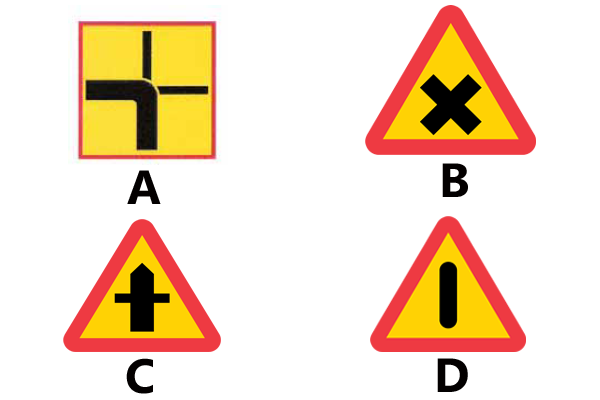
You are driving on a main street. Which of these signs warns you of a dangerous intersection with obstructed vision?
Correct
Sign A indicates the direction of continuation of the main road.
Sign B means a three-way or four-way intersection and the right-hand rule applies at this intersection.
Sign C means a dangerous intersection and obstructed vision. This sign is placed on main roads and the right-hand rule does not apply here.
Sign D warns of various dangers.Incorrect
Sign A indicates the direction of continuation of the main road.
Sign B means a three-way or four-way intersection and the right-hand rule applies at this intersection.
Sign C means a dangerous intersection and obstructed vision. This sign is placed on main roads and the right-hand rule does not apply here.
Sign D warns of various dangers. -
Question 58 of 69
Question 58
In which of these cases do traffic accidents occur most often?
Correct
When the road condition is slippery, accidents are more common.
Incorrect
When the road condition is slippery, accidents are more common.
-
Question 59 of 69
Question 59
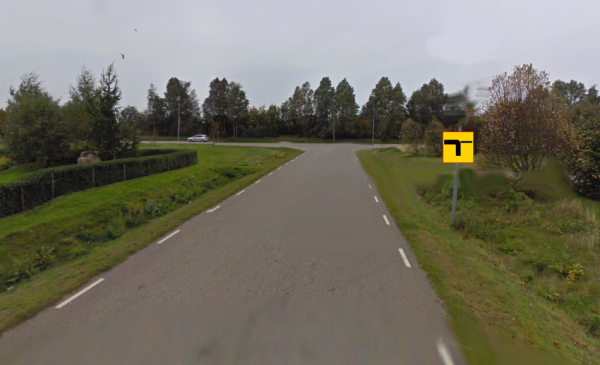
You want to drive left, how do you act if there is a car coming from the right?
Correct
The black line on the sign indicates the extension of the main road. In this case, if you want to turn left, this means that you are continuing on the main road and vehicles coming from the right must give you priority before entering the road.
Incorrect
The black line on the sign indicates the extension of the main road. In this case, if you want to turn left, this means that you are continuing on the main road and vehicles coming from the right must give you priority before entering the road.
-
Question 60 of 69
Question 60
Which fuel has the least impact on global warming?
Correct
Biofuel is a fuel made from plants and renewable sources.
Incorrect
Biofuel is a fuel made from plants and renewable sources.
-
Question 61 of 69
Question 61
You parked your car and got out to check something. What light should you turn on?
Correct
This stick is important and essential in the car, as through it you can control the car’s lights, such as the dipped beam, high beam, fog lights, and all the front and rear lights. I will explain the function of each of the options on the stick, which are usually the same in all cars and have the same shape and symbols.
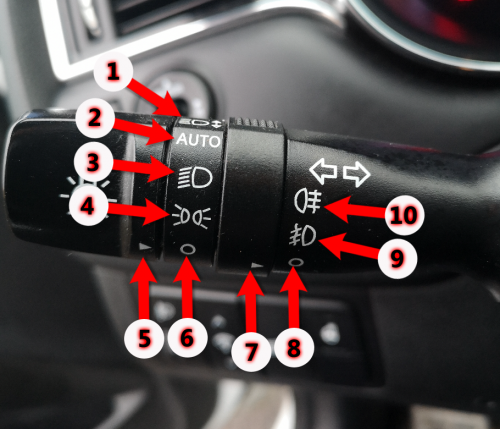
- Number 1: When the stick is lowered down, the high beam is activated. It is preferable to use it in the dark if there are no cars or bicycles on the way, as the high beam causes severe dazzle to the driver in front of you.
- Number 2 is the automatic lighting mode. This means that when it gets dark, the car lights are automatically turned on and turned off automatically when they are not needed.
- Number 3 to operate the high beam, which is the light that must be used unless the car has additional lights that operate without human intervention.
- Number 4: Stop lights, which are the car’s red rear lights, and must be turned on when you are parked on the side of the road.
- Number 5: The handle to select and activate the desired lighting.
- Number 6 When the shift knob is placed on the circle in number 6, the automatic and optional lighting is turned off.
- Number 7 is the knob for the front and rear fog lights. You can move it up to choose which lights you want to turn on.
- Number 8 When the handle is placed on the circle marked with the number 8, the front and rear fog lights are turned on.
- Number 9 to activate and operate the front fog light and is used in heavy fog.
- Number 10 to operate the rear fog light and is used in heavy fog.
Incorrect
This stick is important and essential in the car, as through it you can control the car’s lights, such as the dipped beam, high beam, fog lights, and all the front and rear lights. I will explain the function of each of the options on the stick, which are usually the same in all cars and have the same shape and symbols.
- Number 1: When the stick is lowered down, the high beam is activated. It is preferable to use it in the dark if there are no cars or bicycles on the way, as the high beam causes severe dazzle to the driver in front of you.
- Number 2 is the automatic lighting mode. This means that when it gets dark, the car lights are automatically turned on and turned off automatically when they are not needed.
- Number 3 to operate the high beam, which is the light that must be used unless the car has additional lights that operate without human intervention.
- Number 4: Stop lights, which are the car’s red rear lights, and must be turned on when you are parked on the side of the road.
- Number 5: The handle to select and activate the desired lighting.
- Number 6 When the shift knob is placed on the circle in number 6, the automatic and optional lighting is turned off.
- Number 7 is the knob for the front and rear fog lights. You can move it up to choose which lights you want to turn on.
- Number 8 When the handle is placed on the circle marked with the number 8, the front and rear fog lights are turned on.
- Number 9 to activate and operate the front fog light and is used in heavy fog.
- Number 10 to operate the rear fog light and is used in heavy fog.
-
Question 62 of 69
Question 62
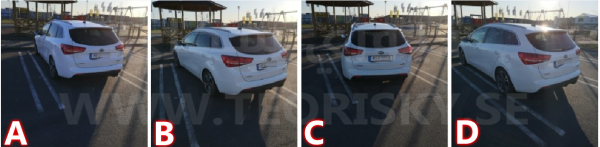
In what case was the parking correct?
Correct
In case A, the parking is correct between the lines drawn on the ground. In the remaining cases, the car was not parked correctly.
Incorrect
In case A, the parking is correct between the lines drawn on the ground. In the remaining cases, the car was not parked correctly.
-
Question 63 of 69
Question 63
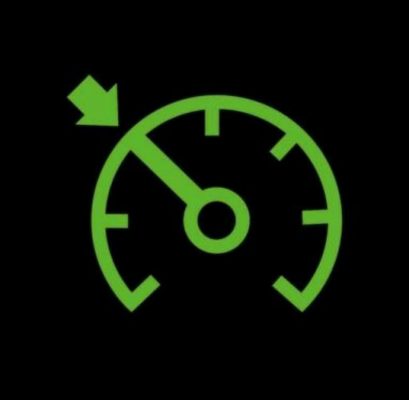
What do you understand by this symbol when it lights up on your car’s dashboard?
Correct
Cruise control is on.
Incorrect
Cruise control is on.
-
Question 64 of 69
Question 64
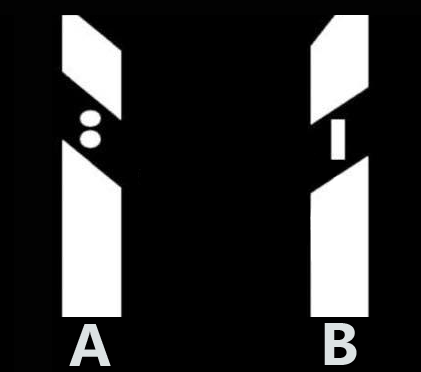
Which of these columns is placed on the left side?
Correct
An illustrative image so that you can receive the information better.
 Incorrect
An illustrative image so that you can receive the information better.
-
Question 65 of 69
Question 65
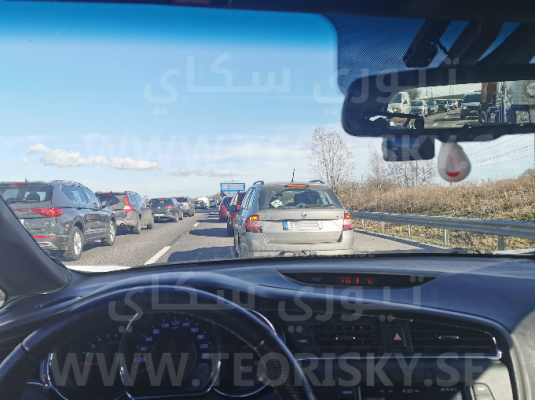
You were driving on a highway and suddenly you saw a queue of cars in front of you and stood waiting. What should you watch for most in this situation?
Correct
When you stop in this situation, it may be due to a traffic accident ahead, and therefore there may be emergency vehicles approaching from behind. You must monitor the situation behind you so that you can take action and move your car to the side of the road in case there are emergency vehicles approaching.
Incorrect
When you stop in this situation, it may be due to a traffic accident ahead, and therefore there may be emergency vehicles approaching from behind. You must monitor the situation behind you so that you can take action and move your car to the side of the road in case there are emergency vehicles approaching.
-
Question 66 of 69
Question 66
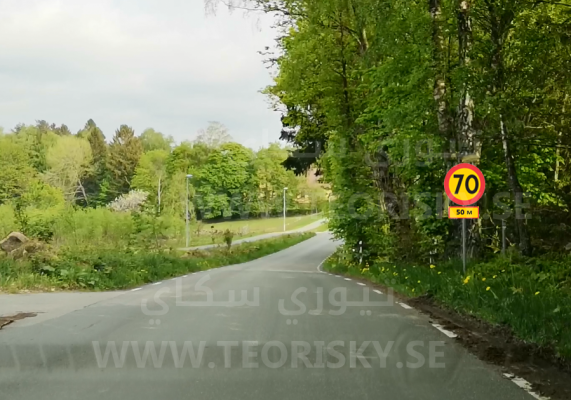
You are driving your car and you see this sign and its attachment. What do these signs mean?
Correct
The first basic sign is the speed limit sign.
The small additional sign is a sign that indicates the distance beyond which the speed limit of 70 km/h will apply.Incorrect
The first basic sign is the speed limit sign.
The small additional sign is a sign that indicates the distance beyond which the speed limit of 70 km/h will apply. -
Question 67 of 69
Question 67
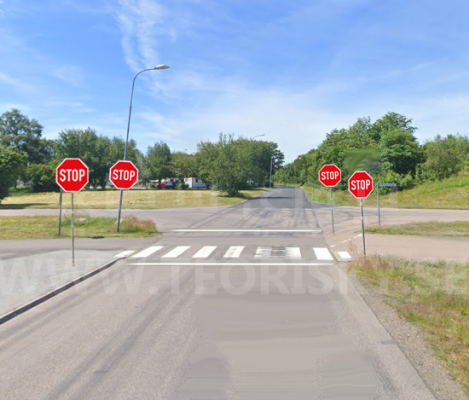
You want to enter this intersection and there is a mandatory stopping sign as shown in the picture, where should you stop?
Correct
If there is a stop line, this means stop at the line. Here, there are two lines and he must stop at the first line and the second line as well.
Incorrect
If there is a stop line, this means stop at the line. Here, there are two lines and he must stop at the first line and the second line as well.
-
Question 68 of 69
Question 68
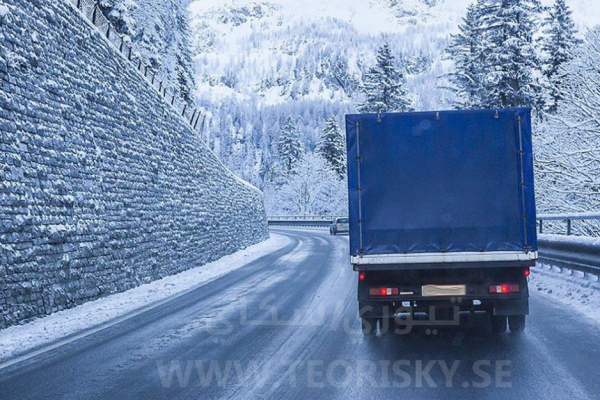
You are driving behind this truck and want to overtake it. Is that right?
Correct
The road is not clear and you are on a bend and there may be vehicles coming from the opposite direction that you do not see yet. Also, the road condition is dangerous and the car may skid. The answer is no, you are not allowed to overtake it.
Incorrect
The road is not clear and you are on a bend and there may be vehicles coming from the opposite direction that you do not see yet. Also, the road condition is dangerous and the car may skid. The answer is no, you are not allowed to overtake it.
-
Question 69 of 69
Question 69
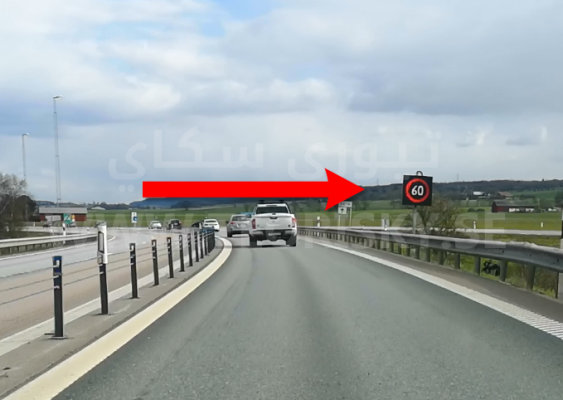
You are driving on a highway with a speed limit of 100 km/h and you see this illuminated sign. What does it mean?
Correct
It is a temporary speed limit sign placed at intersections. Although it is an electronic sign, it is like a regular sign and must be adhered to.
Incorrect
It is a temporary speed limit sign placed at intersections. Although it is an electronic sign, it is like a regular sign and must be adhered to.
- Access to all lessons
- Accessing 1400 questions
- Accessing traffic signs
- Computer or Mobile Login
- Study without ads
- View test results
- Instant activation
- Access to all lessons
- Accessing 1400 questions
- Accessing traffic signs
- Computer or Mobile Login
- Study without ads
- View test results
- Instant activation
- Access to all lessons
- Accessing 1400 questions
- Accessing traffic signs
- Computer or Mobile Login
- Study without ads
- View test results
- Instant activation
- Access to all lessons
- Accessing 1400 questions
- Accessing traffic signs
- Computer or Mobile Login
- Study without ads
- View test results
- Instant activation
- Access to all lessons
- Accessing 1400 questions
- Accessing traffic signs
- Computer or Mobile Login
- Study without ads
- View test results
- Instant activation
- Access to all lessons
- Accessing 1400 questions
- Accessing traffic signs
- Computer or Mobile Login
- Study without ads
- View test results
- Instant activation
- Access to all lessons
- Accessing 1400 questions
- Accessing traffic signs
- Computer or Mobile Login
- Study without ads
- View test results
- Instant activation
- Access to all lessons
- Accessing 1400 questions
- Accessing traffic signs
- Computer or Mobile Login
- Study without ads
- View test results
- Instant activation